



Overview
Banks ask for pay stubs to verify income, confirm employment, and assess financial stability. Pay stubs provide a detailed snapshot of earnings and deductions, helping lenders make informed decisions during financial evaluations.
Income Verification
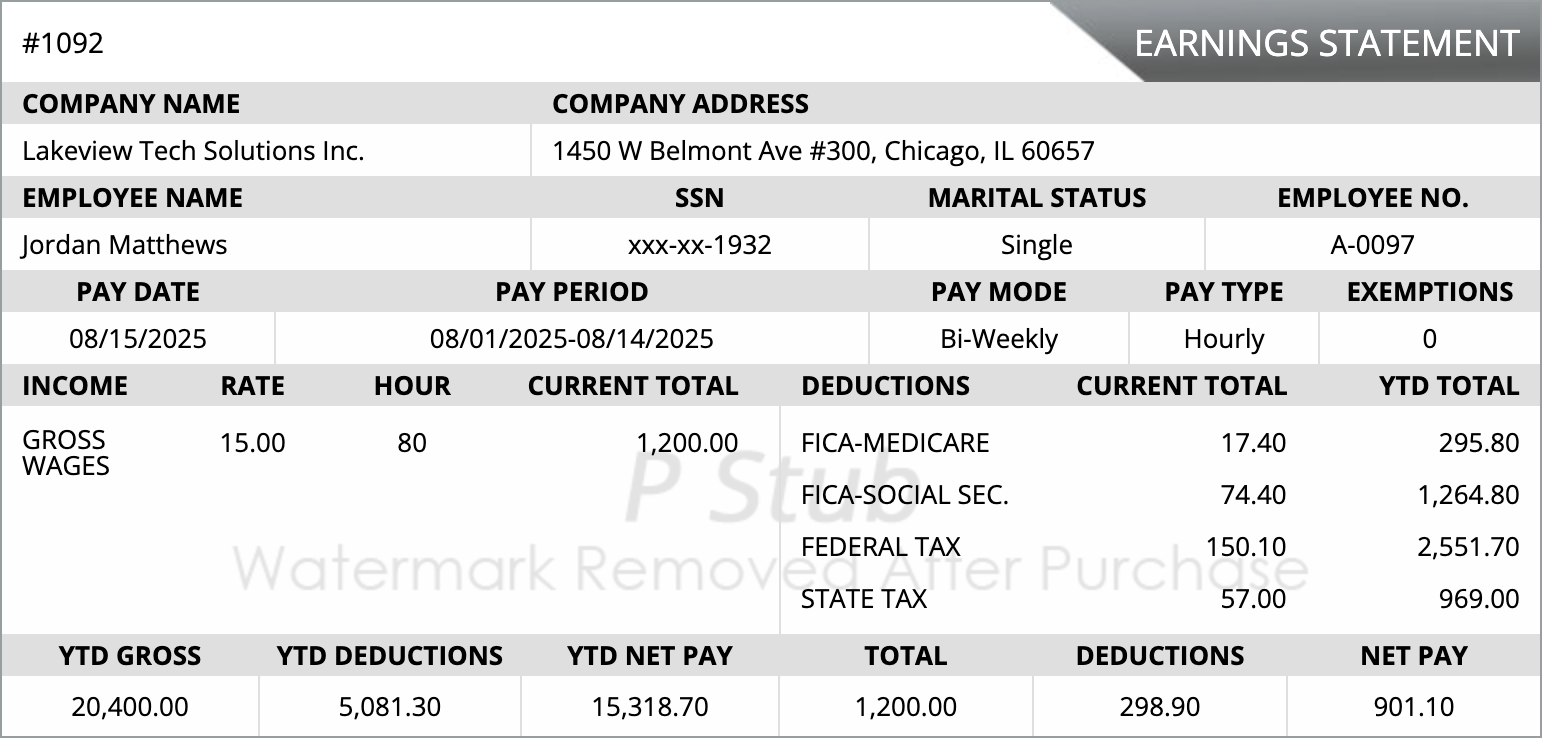
One of the primary reasons banks request pay stubs is to confirm consistent income. Pay stubs show gross earnings, net pay, and pay frequency, allowing banks to determine whether an applicant can meet financial obligations.
Employment Confirmation
Pay stubs help banks confirm that an individual is currently employed. Employer details, pay periods, and regular earnings indicate job stability and ongoing income.
Financial Risk Assessment
Banks use pay stubs to evaluate financial risk. Reviewing earnings and deductions helps lenders estimate disposable income and determine repayment capacity.
What Banks Check on Pay Stubs
- Employee name and employer information
- Pay period dates
- Gross earnings
- Taxes and deductions
- Net pay amount
- Consistency of income over time
Frequently Asked Questions
Why do banks require recent pay stubs?
Recent pay stubs show current income and employment status, which helps banks make accurate financial assessments.
How many pay stubs do banks usually request?
Banks commonly request two to three recent pay stubs to verify income consistency.
Do banks verify the information on pay stubs?
Yes, banks may verify pay stub details to ensure accuracy and authenticity.
Can pay stubs be used as proof of income?
Yes, pay stubs are widely accepted as proof of income for banking and financial purposes.




 Cookies Settings
 Reject All
 Accept All Cookies
 Save & Close