



Overview
Understanding what counts as pay stubs is essential for verifying income, managing finances, and meeting lender or landlord requirements. Not all documents serve as valid proof of earnings.
Acceptable Documents
The following are commonly recognized as pay stubs or equivalent income verification:
- Official payroll-issued pay stubs from your employer
- Electronic pay stubs generated by online payroll or accounting software
- Bank statements showing direct deposits with earnings clearly identified
- Tax documents such as W-2 or T4 slips for annual income
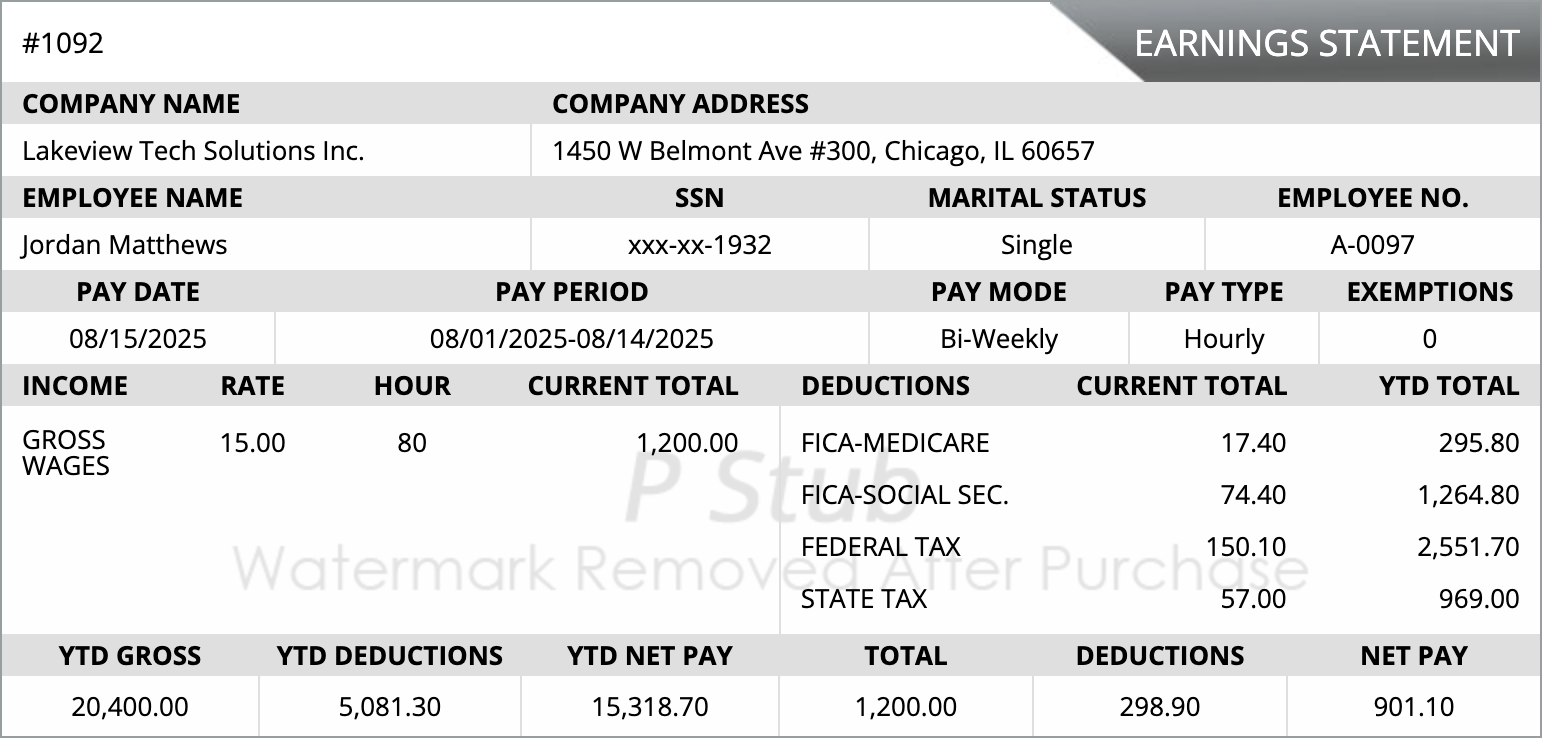
Documents must show the employee’s name, pay period, gross pay, deductions, and net pay to be considered valid.
Uses for Verification
Pay stubs are frequently used to:
- Verify income for loan or mortgage applications
- Provide proof of earnings for rental agreements
- Track personal income and tax deductions
- Maintain employment and financial records
Tips for Employees
Employees should keep pay stubs organized and ensure accuracy. Tips include:
- Save both digital and printed copies
- Verify all deductions, taxes, and contributions
- Use payroll apps or software to generate reliable pay stubs if necessary
- Retain records for at least a few years for financial verification
Frequently Asked Questions
What documents count as pay stubs?
Official payroll stubs, electronic pay stubs from payroll software, bank statements showing earnings, and tax forms like W-2 or T4.
Can I use bank statements as proof of pay?
Yes, if they clearly show the employer name, pay period, and amounts deposited.
Do pay stubs need to show deductions?
Yes, valid pay stubs should display gross pay, deductions, and net pay to verify income accurately.
How long should I keep pay stubs?
It’s recommended to keep pay stubs for at least 2–3 years, especially for tax and loan purposes.




 Cookies Settings
 Reject All
 Accept All Cookies
 Save & Close