



Introduction
Understanding the difference between salary and hourly pay stubs is essential for employers and employees alike. Each type of pay structure results in different calculations, tax treatments, and payroll presentations. Whether you're a business owner or a worker, knowing how pay stubs differ helps ensure accurate documentation and compliance.
Key Differences Between Salary and Hourly Pay Stubs
Salary pay stubs typically reflect a fixed annual income distributed evenly across pay periods, whereas hourly pay stubs depend on hours worked and overtime. The main differences include:
- Salary is consistent regardless of hours worked
- Hourly pay varies with hours and overtime
- Overtime rules apply mainly to hourly workers
- Employee benefits may differ by pay type
Calculating Salary Pay Stubs
To calculate salary pay stubs, divide the annual salary by the number of pay periods in a year (weekly, bi‑weekly, etc.). Deductions and taxes are then subtracted based on applicable federal and state laws.
Calculating Hourly Pay Stubs
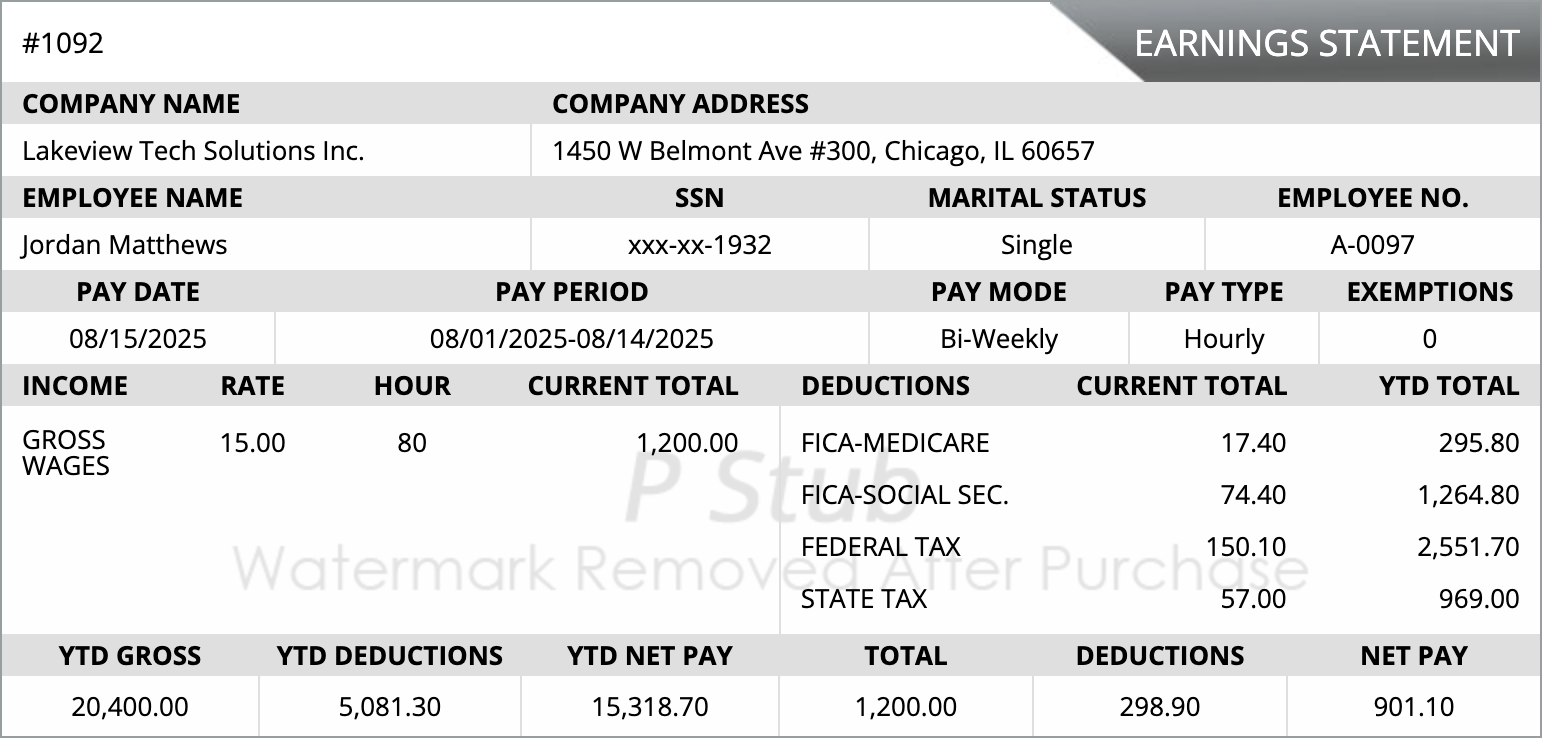
Hourly pay stubs are calculated based on hours worked multiplied by the hourly rate. Overtime calculations may apply for hours worked above standard thresholds, and taxes and deductions are applied accordingly.
Benefits and Drawbacks
Each pay structure has benefits and drawbacks. Salary pay stubs offer predictable income, while hourly pay stubs can reward extra labor through overtime. Employers must weigh administrative complexity, compliance, and worker expectations when choosing pay structures.
Best Practices for Both Pay Stubs
Regardless of pay type, best practices include:
- Ensuring accurate calculation of earnings
- Applying correct tax withholdings
- Including all required payroll information
- Providing pay stubs for every pay period
Frequently Asked Questions (FAQs)
What is the main difference between salary and hourly pay stubs?
Salary pay stubs are based on fixed annual compensation spread across pay periods, while hourly pay stubs vary based on hours worked and overtime.
Do hourly workers get paid overtime?
Yes, hourly workers may receive overtime pay if they work more than a standard set of hours in a week, as defined by state and federal labor laws.
Are pay stub deductions the same for salaried and hourly employees?
Deductions are generally applied the same way for both pay types, based on tax withholdings, benefits, and other payroll obligations.
How often should pay stubs be issued?
Pay stubs should be issued at every pay period, whether weekly, bi‑weekly, or monthly, and should reflect accurate information for that period.
Can hourly pay stubs vary every week?
Yes, because hourly pay stubs depend on hours worked in each pay period, they can vary weekly or by pay cycle.




 Cookies Settings
 Reject All
 Accept All Cookies
 Save & Close