



Overview
This legal pay stub verification guide explains how employers and employees can confirm that payroll records are accurate, complete, and compliant. Verifying pay stubs helps prevent payroll errors, supports financial documentation, and ensures transparency in wage reporting.
What Is Pay Stub Verification
Pay stub verification is the process of reviewing payroll statements to ensure all earnings, deductions, and net pay amounts are calculated correctly and clearly presented. Verification confirms that required payroll details are included and that wage records reflect actual compensation.
Required Pay Stub Information
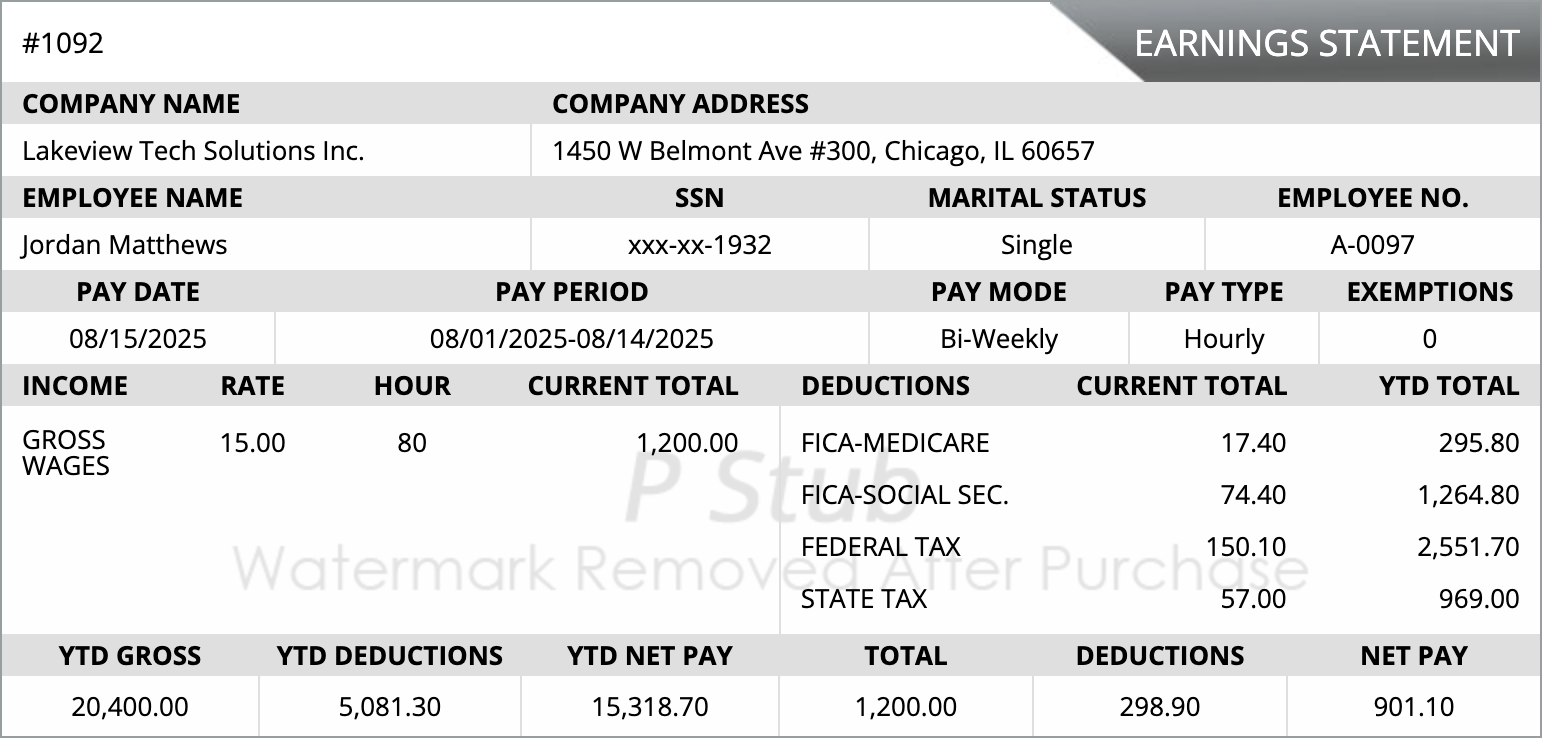
A legally verifiable pay stub typically includes the following details:
- Employee name and identifying information
- Employer name and payroll reference
- Pay period start and end dates
- Gross earnings for the pay period
- Itemized deductions and withholdings
- Net pay amount
Missing or unclear information may cause verification issues or payroll disputes.
Pay Stub Verification Process
Verifying a pay stub involves reviewing both calculations and displayed information. A standard verification process includes:
- Confirming employee details match payroll records
- Reviewing gross earnings against worked hours or salary terms
- Checking deductions for accuracy and clarity
- Ensuring net pay calculations are correct
- Confirming pay periods align with payroll schedules
Employer Responsibilities
Employers are responsible for generating accurate pay stubs and maintaining payroll compliance. Best practices include:
- Using consistent payroll calculation methods
- Providing clear itemization of deductions
- Reviewing payroll data before issuing pay stubs
- Maintaining payroll records for internal audits
- Addressing discrepancies promptly
Employee Review Best Practices
Employees should review pay stubs regularly to ensure accuracy. Helpful practices include:
- Checking earnings and deductions each pay period
- Keeping copies of pay stubs for records
- Reporting errors as soon as they are identified
- Using pay stubs as proof of income when needed
Frequently Asked Questions
What does pay stub verification confirm?
Pay stub verification confirms that earnings, deductions, and net pay amounts are accurate and properly documented.
Why is pay stub verification important?
Verification helps prevent payroll errors, supports compliance, and ensures wage transparency.
Who should verify pay stubs?
Both employers and employees should verify pay stubs to maintain accurate payroll records.
How often should pay stubs be reviewed?
Pay stubs should be reviewed every pay period or whenever a discrepancy is suspected.




 Cookies Settings
 Reject All
 Accept All Cookies
 Save & Close