



Introduction
Check stubs for leasing are commonly used to verify income when applying for apartments or rental housing. Property owners and management companies rely on this documentation to assess whether an applicant can consistently meet monthly rent obligations.
What Are Check Stubs?
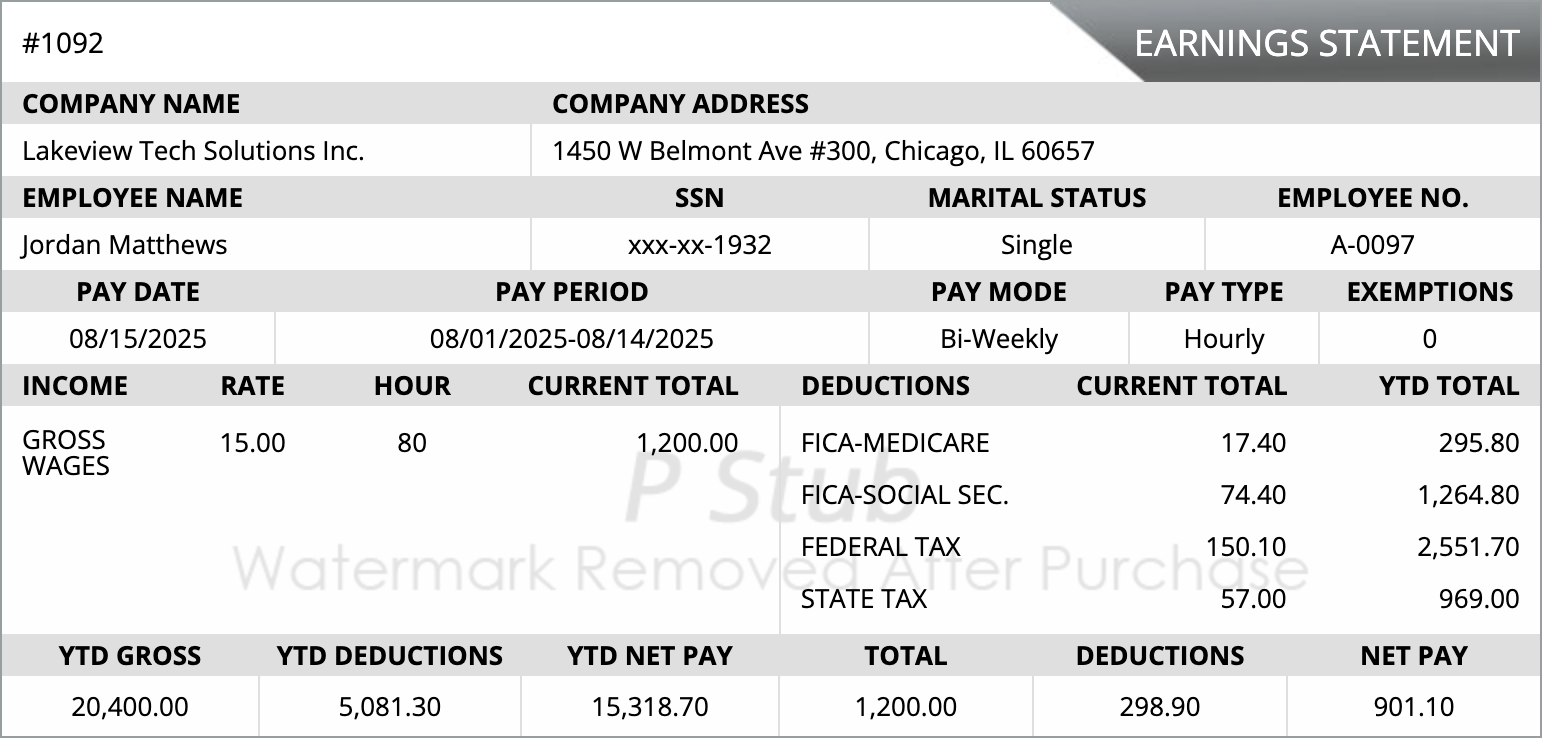
Check stubs are payroll records that outline earnings, deductions, and net pay for a specific pay period. They provide a clear snapshot of income history, making them a standard form of income verification in leasing decisions.
Why Check Stubs Are Required for Leasing
Landlords use check stubs to confirm financial stability. Most leasing applications require proof that monthly income meets a set multiple of the rent amount. Check stubs help validate this without relying solely on self‑reported income.
How Landlords Review Check Stubs
When reviewing check stubs, landlords typically look at:
- Consistency of income across pay periods
- Gross vs. net earnings
- Employment stability
- Pay frequency and employer details
What Check Stubs Should Include
For leasing purposes, check stubs should clearly display:
- Employee name
- Employer information
- Pay period dates
- Gross earnings
- Deductions and net pay
Clear, accurate information improves approval chances and speeds up the leasing process.
Frequently Asked Questions
How many check stubs are required for leasing?
Most landlords request two to three recent check stubs to confirm consistent income.
Can check stubs be used instead of bank statements?
Yes, check stubs are often accepted as primary proof of income without requiring bank statements.
Do landlords verify check stubs?
Many landlords verify employment and income details to ensure accuracy.
Are digital check stubs accepted for leasing?
Digital check stubs are widely accepted as long as the information is clear and complete.




 Cookies Settings
 Reject All
 Accept All Cookies
 Save & Close