



Introduction
Creating accurate pay stubs is essential for businesses, freelancers, and employees to ensure payroll transparency, compliance, and trust. Accurate pay stubs help verify income, simplify tax reporting, and maintain professional records. This guide provides a comprehensive overview of what makes a pay stub accurate, the components it should include, best practices, and how to avoid common errors.
What Are Accurate Pay Stubs?
Accurate pay stubs are payroll documents that clearly outline an employee’s earnings, deductions, and net pay for a given pay period. They provide detailed information such as gross pay, federal and state tax withholdings, Social Security, Medicare, benefits, and other deductions. Accuracy ensures that employees are paid correctly and that employers remain compliant with labor and tax regulations.
Key Components of Accurate Pay Stubs
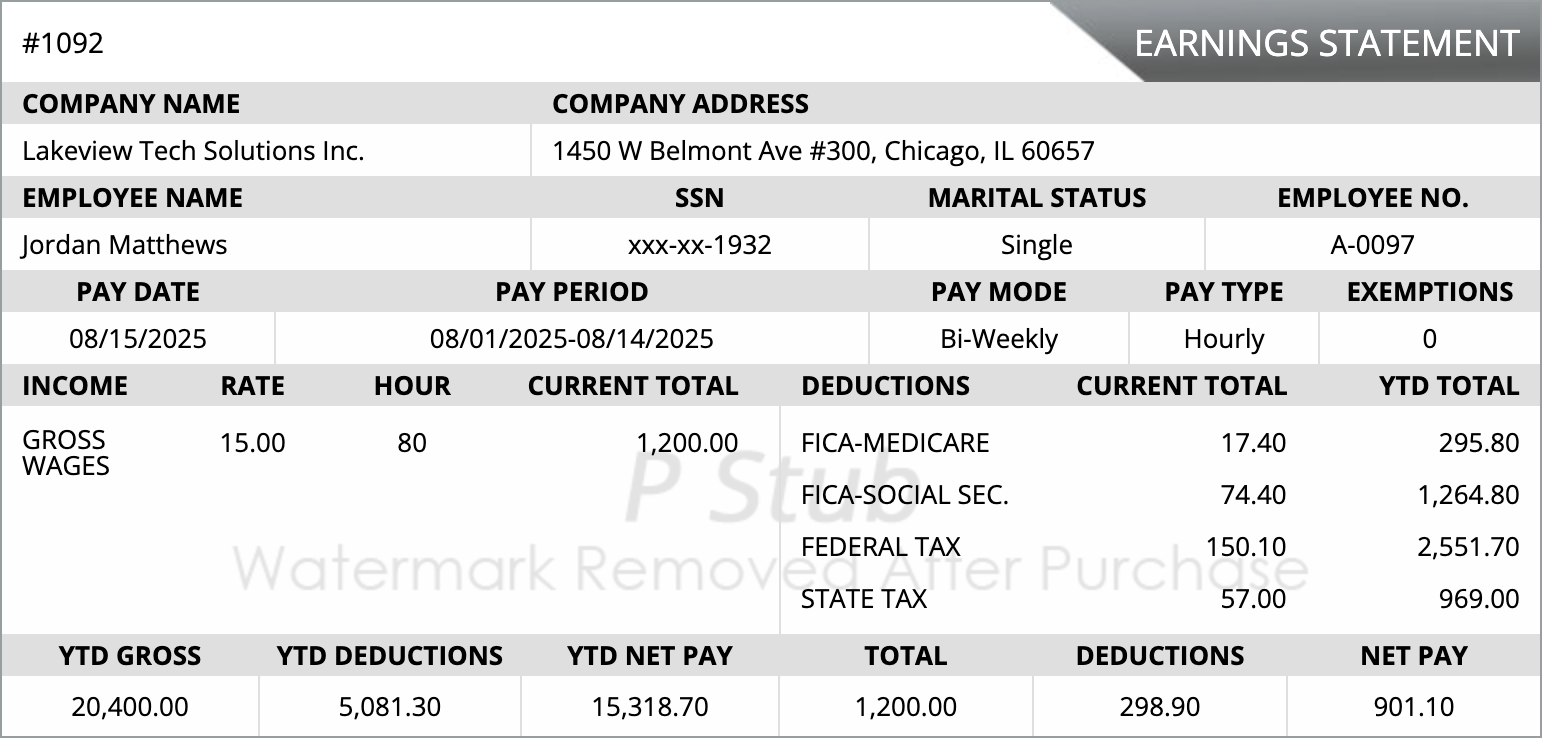
An accurate pay stub should contain all relevant information to reflect true earnings and deductions. Key components include:
1. Employee Information
Full name, address, and employee ID to identify the individual.
2. Employer Information
Company name, address, and tax identification details to establish authenticity.
3. Pay Period
Dates covered by the pay stub for precise accounting.
4. Earnings and Hours
Gross pay, hourly rate, and total hours worked.
5. Deductions and Taxes
Federal and state taxes, Social Security, Medicare, insurance, and other contributions.
6. Net Pay
The final amount the employee takes home after all deductions.
7. Additional Notes
Optional notes or custom messages for clarity or legal compliance.
Benefits of Accurate Pay Stubs
1. Legal Compliance
Accurate pay stubs help employers comply with labor laws, avoid fines, and maintain transparent records.
2. Employee Trust
Employees can verify their income and deductions, increasing confidence and satisfaction.
3. Simplified Tax Reporting
Accurate pay stubs make filing taxes and responding to audits much easier for both employers and employees.
4. Professional Record Keeping
Proper pay stubs create organized payroll history, useful for loans, rental verification, or other financial matters.
Best Practices for Creating Accurate Pay Stubs
- Use reliable pay stub software or generators to reduce human errors.
- Double-check all calculations for gross pay, deductions, and net pay.
- Keep templates up-to-date with tax changes and legal requirements.
- Ensure secure handling of payroll information.
- Provide clear and detailed breakdowns for employees.
Common Mistakes to Avoid
- Incorrect tax calculations or outdated tax rates.
- Missing employee or employer information.
- Unclear breakdown of deductions.
- Failure to update templates after regulation changes.
- Insecure storage of sensitive payroll data.
Frequently Asked Questions (FAQs)
Why are accurate pay stubs important?
Accurate pay stubs ensure correct employee compensation, legal compliance, and transparent payroll records.
Can I use pay stubs for verification purposes?
Yes, accurate pay stubs are commonly used for bank loans, rental agreements, and employment verification.
How can I ensure my pay stubs are accurate?
Using a reliable pay stub generator or software, keeping templates updated, and verifying calculations helps maintain accuracy.




 Cookies Settings
 Reject All
 Accept All Cookies
 Save & Close